
The 4-inch water main located on Midland Drive is undersized and has reached the end of its useful life. TUD will install 1,800 linear feet of 6-inch water main on Midland Dr. A new water main line will then be installed in the shoulder of Phoenix Lake Rd. to connect the new Midland Dr. water main to the new Sommette Dr. water main. Increasing the water main sizes on Sommette Dr. and Midland Dr. and connection between the two will improve system reliability and fire flow in the area.
The Sonora Water Treatment Plant Flocculation Basin Rehabilitation Project will address the deteriorating partition walls, which are nearing structural failure, and will resolve the persistent dead zone within the basin. By replacing the walls and installing advanced baffle paddles, the project will enhance water circulation and ensure the long-term operational integrity of the basin. This critical upgrade is designed to maintain an uninterrupted water supply for our customers while improving system efficiency and reliability.

TUD is proposing to construct and operate the proposed Project on 46-acres near Twain Harte, California in unincorporated Tuolumne County. The first phase of the proposed Project (the subject of analysis in the IS/MND) involves construction and operation of a water treatment facility with an initial operational capacity of 3 million gallons per day (mgd). The proposed Project water treatment facilities include a new 25-acre-foot-capacity raw water reservoir, a raw water pump station, filter building, sludge handling equipment and electrical structures, water conveyance pipelines, a stormwater detention basin, as well as new recreational trails and amenities. New water transmission pipelines would be installed offsite (within roadways and other public rights of way) to convey treated water to existing TUD facilities.
Click the link for more project details and to sign up for project updates: Sierra Pines Regional Water Treatment Facility Project – TUD
Have you ever wondered what that huge tank up on the hill was for? It is a water tank reservoir storing water for the community. Water tanks can be above or below the ground and it is where water is treated and then stored and then gravity feed and/or pumped into homes and businesses. Water tanks are also used to maintain emergency storage supply during power outages, peak demands, and fire flow. While TUD carefully maintains each water tank, most tanks only last 20-40 years. Some tanks can be rehabilitated or replaced, In some cases, they can be consolidated with other tanks.
Cedar Ridge Upper Tanks and Pump Station Replacement
The tanks have reached the end of their useful lives and needs to be replaced. Constructing larger tanks will make maintenance operations in the area more manageable and will provide better water system resiliency. The existing lot is not fenced causing a lack of security to the community’s water supply.
This project will construct a new 250,000-gallon welded steel tank with exterior roof rafters, forced air ventilation, cathodic protection to mediate interior corrosion, stairway access to the tank roof, telemetry monitoring equipment, piping, and fittings. Lot grading will take place to accommodate the new tank and security fencing will be installed. The old tank and pump station will be demolished.

Pedro Y Tank Replacement (Grant Funded)
The Pedro Y Tank, a vital 420,000-gallon steel water storage tank built in the 1980s, is set for replacement due to aging and wear. The project will involve demolishing the old tank and constructing a new one with modern features, including a concrete foundation, roof rafters, forced air ventilation, cathodic protection, a stairway, and updated telemetry systems. Supported by a $2,633,879 Drinking Water Construction Grant, this upgrade will ensure reliable service for years to come.
Willow Springs Tank Replacement
The Willow Springs Tank Replacement Project aims to replace the 210,000 gallon tank that is severely corroded, is at risk of failure, and has reached the end of its useful life. The project involves Demolish and replace the Willow Springs Tank, complete with concrete ringwall foundation, exterior roof rafters, cathodic protection, stairway, telemetry, and forced air ventilation. Demolish a portion of the treatment building and provide better access to the site. Demolish and haul off remaining treatment infrastructure east of the tank.
A 250-foot stretch of the Upper Columbia Ditch is piped with an above-ground 12-inch diameter steel pipe. This pipe transitions the flow of the ditch through a 50-foot drop in elevation. Several of the stacked rock piers that support this pipe have deteriorated over time and the pipe is in danger of sliding off the piers. Because it is fully exposed, the pipe is vulnerable to temperature changes over the seasons which can cause it to expand and contract. Additionally, the pipe is undersized and needs to be a larger diameter. The current state of this pipe jeopardizes TUD’s water supply reliability.
The Upper Columbia Shoot Flume Project will install a new 24-inch diameter steel pipe large enough to carry the full original design capacity of the ditch. New support piers will be installed which will address the deterioration of the existing piers as well as accommodate the expansion and contraction of the above ground pipe.

The Muller Mutual Water System (Muller) is in a state of disrepair with failing tanks, undersized mains, and failing valves. Muller has secured grant funding to replace their water system and consolidated with TUD. Muller’s design includes the installation of 6-inch and 8-inch water mains. The District desires to upsize the water main to provide operational flexibility, redundancy, reliability, and future treatment plant consolidation. The cost of upsizing the main is estimated to be $200,000.
With the exception of the cost to upsize the water main, all other costs will be covered by the grant, including design, project management, and construction.


TUD’s wastewater collection system conveys wastewater and solids from a customer’s home or business to a wastewater treatment plant. In most cases, the wastewater collection system conveys wastewater by gravity utilizing the natural slope of the land. Many areas in Tuolumne County require a lift station which is used to pump wastewater out of low-lying areas where gravity flow is not possible. TUD owns and operates several sewer lift stations that are aged and in need of replacement.
Springfield Sewer Lift Station Rehabilitation Project
The Springfield Lift Station is undergoing upgrades to replace outdated sump, pump, and equipment systems to enhance safety and operational efficiency. This project includes installing a new deeper sump, two advanced pumps, and a modern control panel, resolving frequent pump cycling issues.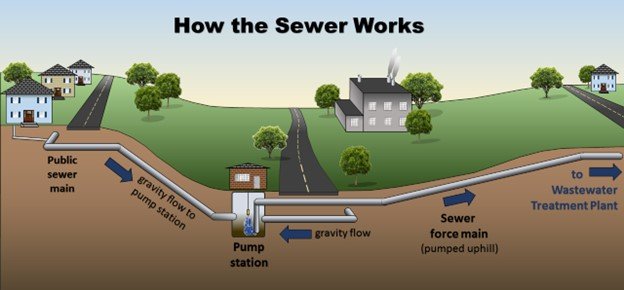
The Columbia Sewer Interceptor frequently experiences surcharging manholes during high flow events when lift stations in Columbia turn on simultaneously. Although the wastewater does not overtop the manhole, surcharging of the manhole is not desired. The interceptor contains two siphons, and several segments of the main are undersized and are restriction points that cause the main to back up into upstream manholes. This project will replace over 2,000 feet of pipe from the Pedro Y intersection to the Old Sonora-Columbia road.
The Filter and Chlorine Contact Basin and South Process Station at the new Sonora Regional Wastewater Treatment Facility is comprised of several pumps, flow meters, and other equipment that is sensitive to extreme weather. This structure currently does not have suitable cover to protect the equipment. Furthermore, the open CCB structure allows chlorine to easily evaporate in the summer, thus increasing chlorine demands which translates to increase chemical costs. This project will design and construct a cover over the Filters and Chlorine Contact Basin and South Process Station. Project began construction in FY26 and included the design of both the Filter and Chlorine Contact Basin and the South Process Station.
August 30, 2024
TUD is pleased to announce that it has been awarded a $166,381 grant from the 2023-2024 CAL FIRE Wildfire Prevention Grant Program. This funding will support the TUD Critical District Facilities Fuels Reduction Phase 3 Project, which will significantly benefit the community by enhancing wildfire safety and resilience.
Following the achievements of earlier wildfire hazard mitigation efforts, this project seeks to enhance additional critical infrastructure within the TUD service area. The project focuses on reducing wildfire risks around three water treatment plants and five water storage tanks that provide service to 15,000 residents in high-risk fire zones. Each of these eight critical infrastructure sites are essential for the provision of water for human health, sanitation, and emergency fire suppression. Don Perkins, General Manager of TUD, states, “This grant represents another pivotal step in our ongoing efforts to safeguard our community against the increasing threats of wildfires.”
